The Heart of Temperature Control: How Your Car’s Cooling System Works

Imagine running a marathon in a heavy winter coat. Within minutes, you’d overheat, lose energy, and eventually collapse. Your car’s engine faces a similar challenge every single day.
As it burns fuel, a combustion engine generates an immense amount of heat—enough to easily destroy its own metal components. To keep everything running smoothly, your vehicle relies on an unsung hero: the engine cooling system.
But how exactly does this network of parts keep your engine at the perfect operating temperature? Let’s break down the magic happening under your hood.
The Core Mission: Managing the Heat
An engine operates best when it is warm, but not too hot. The sweet spot is usually between 90°C and 105°C. The cooling system’s job isn’t just to keep the engine cold; it manages the temperature, absorbing excess heat when the engine gets hot and retaining heat when it’s warming up.
Here is a step-by-step look at how the main components work together to make that happen:
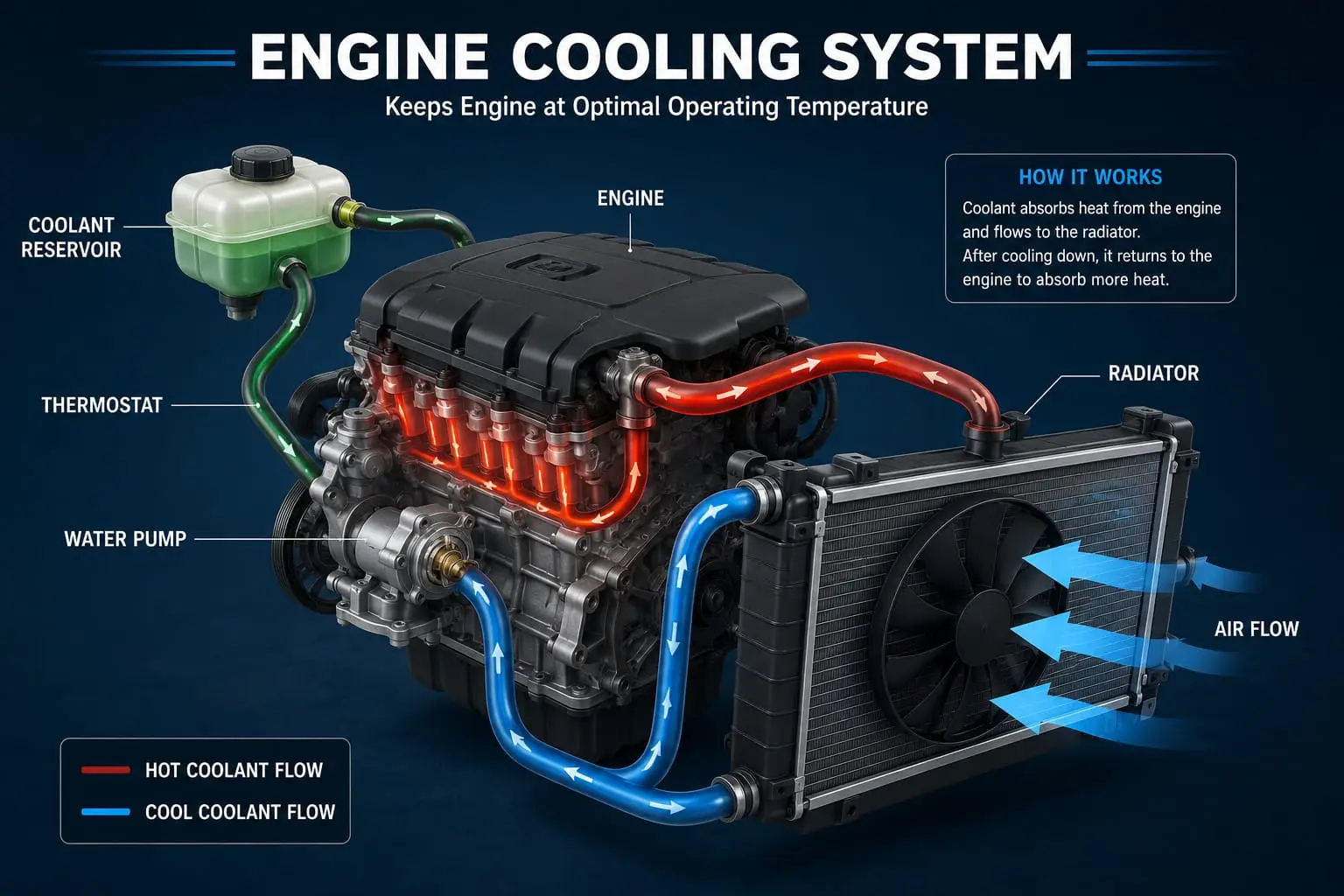
[Water Pump] ➔ Pumps Coolant ➔ [Engine Block] (Absorbs Heat) ➔ [Thermostat] (Checks Temp) ➔ [Radiator] (Cools Down) ➔ [Coolant Reservoir]
Meet the Key Players
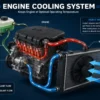
To understand the system, it helps to know the roles of the main components shown in your system diagram:
1. The Coolant (The Heat Carrier)
Often called antifreeze, this specialized liquid is a mix of water and chemical additives. It flows through the engine block, acting like a sponge to absorb intense heat directly from the cylinders.
2. The Water Pump (The Heart)
Driven by the engine’s belt, the water pump acts as the heart of the system. It continuously pushes the coolant through the engine, hoses, and radiator, keeping the cycle moving.
3. The Thermostat (The Gatekeeper)
Located between the engine and the radiator, the thermostat acts as a temperature-sensitive valve.
- When the engine is cold: It stays closed, forcing the coolant to bypass the radiator so the engine can warm up quickly to its optimal temperature.
- When the engine gets hot: It opens up, allowing the hot coolant to flow toward the radiator to cool down.
4. The Radiator (The Heat Exchanger)
This is where the magic of cooling happens. The hot coolant passes through thin, metallic tubes inside the radiator. As you drive, oncoming air passes through the radiator’s fins, absorbing the heat from the liquid and dissipating it into the atmosphere. (When you’re stuck in traffic, a radiator fan kicks on to force air through manually).
5. The Coolant Reservoir (The Buffer)
Liquid expands when it gets hot. The reservoir (or overflow tank) provides a safe place for expanding coolant to go, and feeds it back into the system as the engine cools down.
Why Routine Maintenance is Non-Negotiable
Because this system is under constant pressure and extreme temperature shifts, things can wear out over time.
- Coolant degrades: Old coolant can become acidic, eating away at the inside of your radiator and engine block.
- Leaks happen: A cracked hose or a failing water pump can cause you to lose coolant rapidly, leading to immediate overheating.
⚠️ A Note on Safety: Never open a radiator cap or coolant reservoir when the engine is hot. The system is under high pressure, and escaping steam or liquid can cause severe burns.
Keep Your Cool with Bangalore Radiators
A well-maintained cooling system prevents costly engine rebuilds and ensures your car runs efficiently for years to come. If you’ve noticed your temperature gauge creeping up, a puddle of bright green or pink fluid under your driveway, or if it’s simply been a while since your last service, it’s time for a check-up.
At Bangalore Radiators, we specialize in keeping your vehicle’s cooling system in peak condition. Bring your car in today for a comprehensive cooling system inspection!